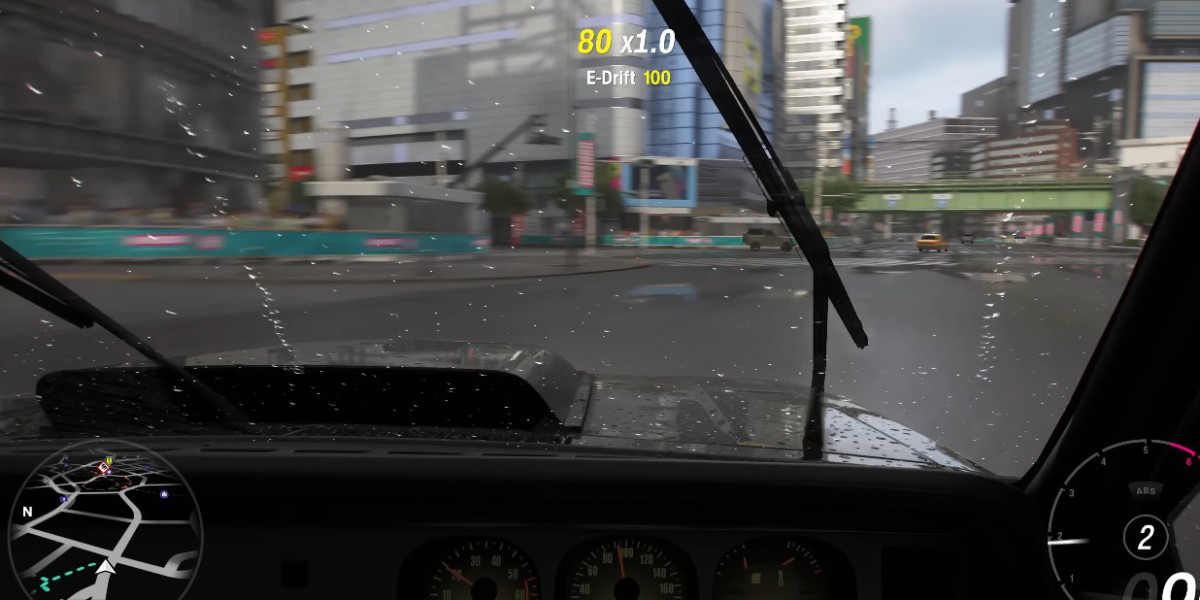
Forza Horizon 6 has officially dropped, taking us straight to the mountain touge roads and neon-lit highways of Japan. If you are trying to tame a high-powered Rear-Wheel Drive (RWD) beast on these tight corners, you already know the struggle: immediate wheelspin off the line and a rear end that wants to overtake the front the second you breathe on the throttle.
While All-Wheel Drive (AWD) swaps are an easy crutch, nothing beats the raw satisfaction, top-speed potential, and cornering fluidness of a properly tuned RWD car. To help you master this, here is a practical, fluff-free guide to dialing in your RWD setups using real in-game numbers and mechanics.
The Core Philosophy: Mechanical Balance First
In Forza Horizon 6, the tuning meta has shifted slightly with the introduction of the new Mechanical Balance indicator and updated Aero Balance stats. The old habit of simply stiffening everything up doesn't work here.
For RWD cars, your ultimate goal is to keep the rear tires planted during acceleration while maintaining enough front-end bite to handle sharp turn-ins. When looking at your anti-roll bars (ARBs) and suspension, you generally want your Mechanical Balance metric to sit in the 0.55 to 0.65 window, with 0.60 being the absolute sweet spot for stable rear-end traction.
Step-by-Step RWD Tuning Setup
Let’s look at a concrete case study: a mid-class Nissan Silvia S15 built for A-Class or S1-Class sprint and touge racing, sitting at roughly 450 horsepower with a 54% front / 46% rear weight distribution.
1. Tires & Pressures
Tires are the foundation of your build. For a 450 hp RWD car, don't skimp on tire width—max out your rear tire width completely.
The Math: Your goal is to hit roughly 33 PSI when the tires are fully warmed up during a race.
The Baseline: Start cold at 28.0 PSI in the front and 31.0 PSI in the rear. Because RWD cars heat up the rear tires rapidly through wheelspin and power delivery, the rear pressure will balloon faster. Keeping the front lower gives you a larger contact patch for initial corner entry.
2. Alignment & The Anti-Squat Secret
Alignment dictates how your tires touch the asphalt when the chassis rolls into a corner.
Camber: Set the front to -1.5° and the rear to -1.0°. RWD cars need a slightly tamer rear camber so that when you launch or accelerate out of a corner, the tire squats flat against the ground for maximum longitudinal grip.
Toe: Leave the front at 0.0°. For the rear, add 0.1° to 0.2° of Toe-In (positive toe). This tiny adjustment slightly points the rear wheels inward, drastically stabilizing the rear end when you smash the gas pedal.
Caster: Set this between 6.5° and 7.0° to maintain high-speed stability on Tokyo's highways.
3. Anti-Roll Bars (ARBs) & Springs
This is where you fix your oversteer. The golden rule of Forza tuning is: fix the end with the problem. If your RWD car is spinning out on corner exits, your rear suspension is too stiff.
Using the standard formula (Max - Min) x Weight% + Min, calculate your spring rates based on your car's weight distribution. However, for the ARBs, you want to purposefully soften the rear to force mechanical grip. If your front ARB is set to 35.0, try dropping your rear ARB down to 20.0 or 25.0. This allows the rear chassis to flex and plant the tires instead of breaking traction.
4. The Differential (The Ultimate RWD Fix)
If you don't upgrade to a Race Differential, you cannot tune a RWD car properly. The differential controls how much the left and right rear wheels lock together.
Acceleration: Set this to 70% - 75%. If it's too high (e.g., 90%+), both tires lock instantly and you slide sideways. If it's too low (under 50%), you get "one-wheel peel" where the inside tire spins uselessly.
Deceleration: Set this low, between 15% and 25%. A lower deceleration value allows the wheels to rotate independently when you lift off the throttle, preventing snap-oversteer when entering a corner.
Upgrades vs. Tuning: Getting the Edge
Tuning can only fix what the chassis allows. If you have too much power and stock tire compounds, no amount of slider adjustment will save you. If you are running low on in-game credits to buy the best race brakes, weight reduction options, or compound upgrades, you can easily use trusted platforms like U4N to buy FH6 items to quickly get your build pieces. Maximizing your weight reduction should always be your priority, as a lighter car naturally requires less aggressive tuning values to stay stable.
Aero Balance and Gearing Tweaks
Finally, handle your aerodynamics and gears to wrap up the build:
| Setting Feature | Target Value / Range | Why It Matters for RWD |
| Aero Balance Stat | 0.40 – 0.45 | Ensures downforce is balanced correctly so the nose doesn't dive or the rear doesn't wash out at high speeds. |
| 1st & 2nd Gear | Set "Longer" (Towards Speed) | Widens the RPM range to prevent instant redlining and wheelspin when launching. |
| Final Drive | Adjust based on HP (e.g., ~4.10 for 450hp) | Ensures your top gear matches the longest straightaway on the map without bogging down. |
Test your car on a familiar circuit, change only one slider at a time by small increments (e.g., 2-3 clicks), and use the in-game telemetry to check your live tire temps and pressures. With a bit of patience, your RWD builds will comfortably hunt down AWD cars on any track in Japan.