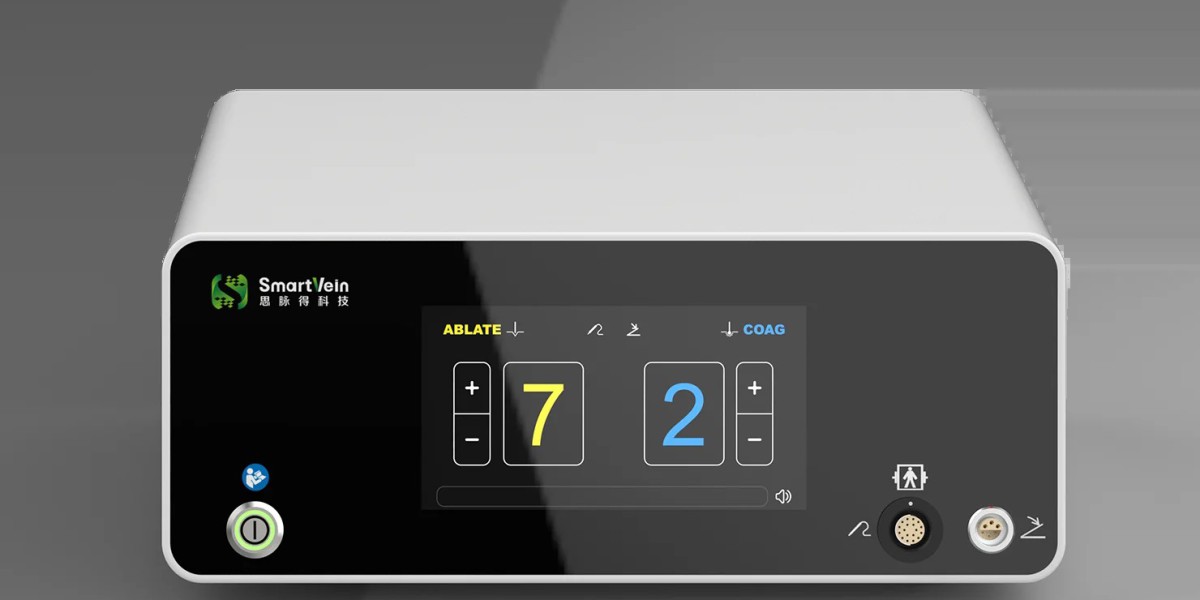
In modern surgical environments, the reliability and stability of medical equipment directly affect operational safety and clinical efficiency. As an essential component of advanced surgical systems, the Plasma surgery system host integrates multiple critical modules, including radio frequency power units, control systems, cooling components, transformers, capacitors, pumps, and fans. Any unexpected failure of these components may interrupt surgical procedures and increase operational risks.
To improve equipment reliability, vibration spectrum-based fault prediction technology has emerged as an effective approach for early fault detection and predictive maintenance. By analyzing vibration signals generated during equipment operation, this technology can identify abnormal frequency characteristics, detect potential component degradation, and provide early warnings before serious failures occur.
This approach combines vibration sensing technology, signal processing algorithms, machine learning models, and medical engineering principles to build a comprehensive health monitoring system for Plasma surgery equipment.
Technical Principle of Vibration Spectrum-Based Fault Prediction
The operating condition of mechanical and electronic components is closely related to their vibration characteristics. Under normal operating conditions, each component inside the Plasma surgery system host produces relatively stable vibration patterns, including fundamental frequencies, harmonic frequencies, and characteristic spectral distributions.
However, when internal components begin to deteriorate, vibration signals often change before complete failure occurs.
Common causes of abnormal vibration include:
- Mechanical wear, such as bearing aging
- Electrical component degradation, such as capacitor expansion or failure
- Structural looseness caused by loose screws or connections
- Cooling system abnormalities, such as pump or fan malfunction
- Resonance caused by structural changes
These failures generate specific changes in vibration frequency, amplitude, and energy distribution. By collecting vibration signals and analyzing their spectrum characteristics, engineers can identify abnormal patterns and predict possible equipment failures.
The core concept is to establish a relationship between vibration spectrum characteristics and equipment health status, enabling early diagnosis and preventive maintenance.
Key Technical Process of the Fault Prediction System
1. Vibration Signal Acquisition
Accurate vibration data collection is the foundation of fault prediction.
Sensor Selection
Acceleration sensors, especially piezoelectric vibration sensors, are commonly used because they provide:
- High sensitivity
- Wide frequency response range
- Excellent capability for capturing mechanical vibration details
Typical sensor parameters may include:
- Frequency response: approximately 0.5 Hz–10 kHz
- Measurement range: selected according to equipment vibration intensity
- High resistance to environmental interference
The appropriate sensor specifications should be selected based on the installation conditions and vibration characteristics of different components.
Sensor Installation Locations
To achieve comprehensive monitoring, sensors should be installed near major vibration sources, including:
Power module components
Components such as transformers and inductors may generate high-frequency electromagnetic vibration signals.
Cooling system components
Fans and pump systems produce rotating mechanical vibration related to speed, balance, and bearing condition.
Equipment housing and frame
The shell structure reflects overall resonance behavior and structural stability.
Connection points
Screws, interfaces, and mounting structures may generate abnormal vibration when loosened.
Synchronized Data Collection
To improve diagnostic accuracy, vibration signals should be collected together with operating parameters, including:
- Output power
- Temperature
- Current
- Operating mode
This allows the system to distinguish normal vibration changes caused by different surgical modes from actual equipment faults.
2. Vibration Signal Processing and Feature Extraction
Raw vibration signals collected from Plasma surgery equipment often contain interference from electromagnetic fields, operating room environments, and other devices. Therefore, signal processing is required before analysis.
Signal Denoising
Advanced filtering technologies can improve signal quality, including:
- Wavelet transform
- Adaptive filtering
- Noise reduction algorithms
These methods help remove unwanted interference while preserving important fault-related information.
Time-Domain Feature Analysis
Time-domain parameters provide basic information about vibration intensity and impact characteristics.
Common indicators include:
- Root Mean Square (RMS)
- Peak value
- Crest factor
- Kurtosis
For example, increased kurtosis may indicate impact-type faults such as looseness or component damage.
Frequency-Domain Spectrum Analysis
Frequency analysis is the core technology of vibration-based diagnosis.
Through Fast Fourier Transform (FFT), vibration signals are converted into frequency spectra, allowing engineers to identify:
- Bearing characteristic frequencies
- Motor rotation frequencies
- Gear-related frequencies
- Harmonic components
- Abnormal energy distribution
Important frequency features include:
Characteristic Frequency Changes
Different failures produce different frequency responses, such as:
- Bearing outer race faults
- Bearing inner race faults
- Rotating imbalance
- Structural resonance
Spectral Energy Distribution
The proportion of energy within specific frequency bands can indicate abnormal conditions.
For example, increased energy in certain frequency ranges may suggest component deterioration or abnormal vibration sources.
Resonance Frequency Shift
Component wear or structural changes may reduce system stiffness, causing natural frequency changes that can be detected through spectrum analysis.
3. Establishing Fault Feature Libraries
Reliable fault prediction requires a comprehensive relationship between vibration patterns and equipment failure conditions.
A fault-spectrum feature database can be created using:
- Historical maintenance records
- Laboratory simulation tests
- Equipment operation data
- Failure experiments
Typical fault patterns include:
| Fault Type | Vibration Characteristics |
|---|---|
| Bearing wear | Increased bearing characteristic frequencies, harmonic components, sidebands, and higher spectral energy |
| Fan imbalance | Dominant rotational frequency peak and periodic vibration pattern |
| Loose capacitor or electrical components | Random impulse signals and increased kurtosis values |
| Cooling pump blockage | Increased rotational frequency energy and high-frequency noise |
| Structural resonance | Excessive energy concentration within specific narrow frequency bands |
This feature library provides the foundation for intelligent diagnosis models.
4. Intelligent Fault Diagnosis and Prediction Models
With extracted vibration features, machine learning technologies can be applied to classify faults and predict future equipment conditions.
Supervised Learning Methods
Algorithms such as:
- Support Vector Machine (SVM)
- Random Forest (RF)
- Convolutional Neural Network (CNN)
can analyze labeled vibration data and classify equipment states, including:
- Normal operation
- Bearing degradation
- Structural looseness
- Cooling system failure
Unsupervised Learning Methods
When fault samples are limited, unsupervised methods can detect abnormal patterns through:
- K-means clustering
- Autoencoder models
These approaches identify vibration signals that deviate from normal operating conditions.
Remaining Useful Life Prediction
Time-series models such as Long Short-Term Memory Networks (LSTM) can analyze vibration trends over time and estimate:
- Component degradation speed
- Remaining service life
- Recommended maintenance timing
This supports predictive maintenance strategies.
5. Real-Time Monitoring and Early Warning System
After the diagnostic model is developed, it can be integrated into the equipment controller or external monitoring platform.
Real-time monitoring functions include:
Threshold-Based Alarm
The system monitors:
- Frequency amplitude
- Spectral energy changes
- Abnormal vibration intensity
When parameters exceed predefined limits, an alarm is generated.
Trend-Based Prediction
Instead of waiting for failure, the system analyzes long-term changes.
For example:
- Continuous increase in bearing fault frequency amplitude
- Gradual increase in vibration energy
These trends may indicate developing problems and allow maintenance teams to respond weeks in advance.
Human-Machine Interface
A monitoring interface can display:
- Real-time vibration spectrum
- Equipment health status
- Fault probability
- Recommended maintenance actions
For example:
“Inspect cooling pump bearing condition.”
This improves maintenance efficiency and reduces troubleshooting time.
Application Value and Technical Challenges
Application Benefits
Improved Surgical Safety
Early fault detection reduces the risk of unexpected equipment shutdown during medical procedures.
Reduced Maintenance Costs
The technology changes maintenance strategies from reactive repair to predictive maintenance, reducing downtime and unnecessary component replacement.
Extended Equipment Service Life
Detecting minor issues, such as early-stage looseness or wear, helps prevent further damage and improves equipment durability.
Current Challenges
Weak Signal and Electromagnetic Interference
Plasma surgery systems operate with high-frequency electromagnetic fields that may interfere with vibration measurements.
Potential solutions include:
- Improved shielding design
- Differential sensors
- Advanced filtering algorithms
Variable Operating Conditions
Different surgical modes, such as cutting and coagulation, produce different power loads and vibration characteristics.
Therefore, adaptive models capable of handling multiple operating conditions are required.
Limited Fault Data
Medical equipment failures are relatively rare, resulting in limited training samples.
Possible solutions include:
- Simulation-based data generation
- Finite element vibration modeling
- Data augmentation technologies
Medical Compliance Requirements
Any monitoring modification must comply with medical device regulations, such as IEC 60601 standards, ensuring that additional sensors do not affect equipment safety or performance.
Future Development Trends
Future Plasma surgery system monitoring technologies will move toward multi-source data fusion and intelligent digital management.
Potential improvements include:
- Combining vibration, temperature, current, and acoustic signals
- Building digital twin models of equipment operation
- Applying advanced artificial intelligence algorithms
- Developing cloud-based equipment health management platforms
These technologies will further improve fault prediction accuracy and provide stronger support for safe medical equipment operation.
Conclusion
The vibration spectrum-based fault prediction system for Plasma surgery system hosts provides an effective method for improving equipment reliability through the complete process of:
Signal acquisition → Feature extraction → Intelligent diagnosis → Real-time warning
By combining vibration analysis, artificial intelligence, and medical engineering, this technology enables early fault detection, reduces maintenance risks, and improves surgical equipment safety.
With the continuous development of intelligent medical devices, vibration-based predictive maintenance will become an increasingly important technology for ensuring the stable operation of advanced surgical systems.