As CNC machining technology continues to advance, manufacturers are expected to produce increasingly complex components while maintaining tighter dimensional tolerances and higher production efficiency. Industries such as aerospace, medical devices, semiconductor equipment, and precision automation all rely on machining processes where even the smallest positioning error can affect final product quality.
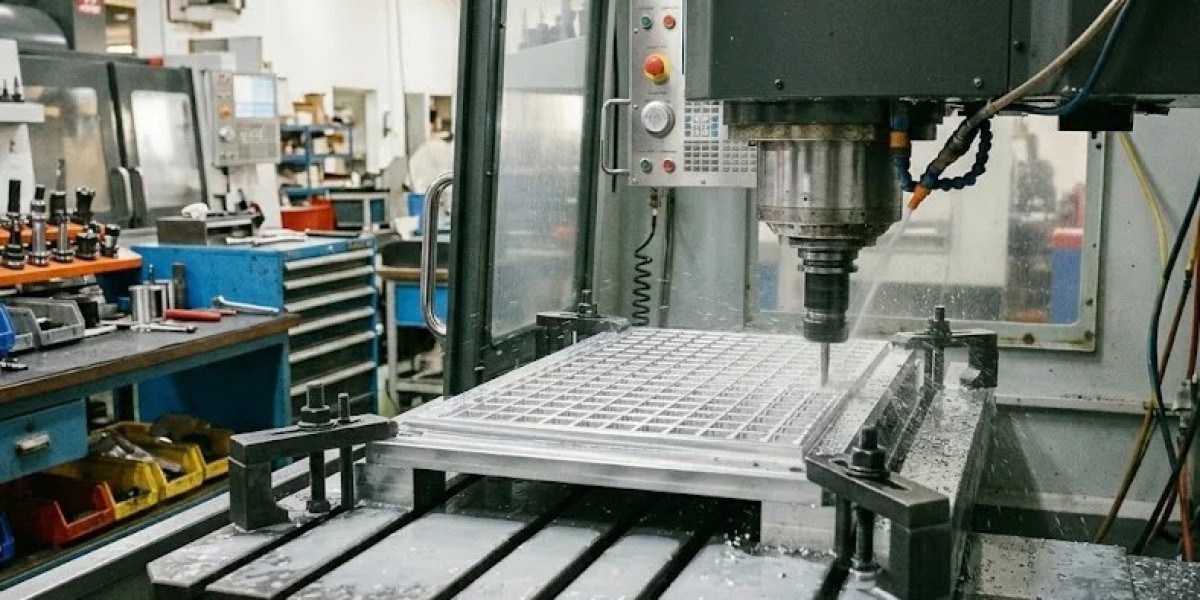
Although modern CNC machining centers offer exceptional machining capability, their performance depends heavily on the quality of the workholding system. A poorly designed fixture plate can introduce vibration, deformation, or positioning errors that compromise machining accuracy. This is why many manufacturers now invest in a professional custom fixture plate machining service to improve production consistency, reduce setup time, and ensure repeatable precision.
With extensive experience in precision machining and fixture manufacturing, AICHI TECHNOLOGY provides custom fixture plate solutions engineered for demanding industrial applications, helping customers achieve reliable and efficient production.
Why Standard Fixture Plates Are No Longer Sufficient
Standard fixture plates are suitable for general machining tasks, but they often struggle to meet the requirements of today's high-precision manufacturing.
Modern components frequently feature:
- Complex three-dimensional geometries
- Tight GD&T requirements
- Thin-wall structures
- Multi-axis machining operations
- High-value engineering materials
These applications require workholding systems specifically designed for each production process rather than relying on universal fixtures.
Custom fixture plates provide greater positioning accuracy, improved rigidity, and optimized machining accessibility, allowing manufacturers to maximize the capabilities of advanced CNC equipment.
Material Selection: The Foundation of Dimensional Stability
The quality of a fixture plate begins with selecting the appropriate material.
One of the most common issues found in low-cost fixture plates is deformation caused by residual internal stress. Even if a plate appears flat after machining, stress released during production can lead to gradual distortion over time.
Professional manufacturers carefully evaluate both material properties and stress-relief processes before machining begins.
Aluminum Fixture Plates
For lightweight applications and automated production systems, aluminum remains one of the most popular choices.
Materials such as MIC-6 cast aluminum provide:
- Excellent dimensional stability
- High flatness
- Reduced internal stress
- Easy machinability
When higher mechanical strength is required, 7075-T6 aluminum offers improved rigidity while maintaining relatively low weight.
Additional stress-relief treatments help improve long-term dimensional stability.
Steel and Stainless Steel Fixture Plates
Heavy-duty industrial environments often require stronger materials.
Common choices include:
- 4140 alloy steel
- SUS304 stainless steel
- Pre-hardened tool steel
These materials offer superior wear resistance, excellent structural strength, and greater resistance to thermal expansion, making them ideal for automotive tooling, precision molds, and medical manufacturing.
Precision Fixture Design for Modern CNC Machining
A well-designed fixture plate is more than a flat work surface.
It must accurately locate the workpiece while providing sufficient clamping force without introducing deformation.
High-Precision Positioning Systems
Professional custom fixture plates typically separate positioning and clamping functions.
Instead of relying solely on threaded holes, advanced designs incorporate:
- Precision dowel pin holes
- Hardened steel bushings
- Helical thread inserts
- Modular locating systems
This design minimizes wear while maintaining highly accurate positioning over long production cycles.
Properly engineered locating systems can achieve repeatability within only a few microns.
Optimized for Five-Axis Machining
Five-axis CNC machining requires unrestricted tool access from multiple directions.
Custom fixture plates can be designed to support:
- Zero-point clamping systems
- Bottom-mounted workholding
- Modular fixture configurations
- Quick-change tooling systems
These solutions reduce setup time while allowing complete machining in a single operation, improving both productivity and dimensional accuracy.
Improving Rigidity and Reducing Vibration
During high-speed machining, cutting forces generate vibration throughout the machining system.
If the fixture plate lacks sufficient rigidity, the resulting vibration may lead to:
- Tool chatter
- Reduced surface quality
- Poor dimensional accuracy
- Accelerated tool wear
- Shorter machine life
To address these challenges, engineers optimize fixture plate structures using advanced engineering analysis.
Structural Optimization
Modern custom fixture plates often include:
- Reinforcing ribs
- Internal support webs
- Lightweight pocket structures
- Balanced load distribution
These design features increase structural stiffness while reducing unnecessary weight.
For large fixture systems, additional vibration-damping materials may also be integrated into the design to improve machining stability during heavy cutting operations.
Comprehensive Quality Control
Precision fixture plates must be inspected with the same level of accuracy expected from the components they support.
At AICHI TECHNOLOGY, quality control is integrated throughout the entire manufacturing process.
Coordinate Measuring Machine (CMM) Inspection
Critical dimensions are verified using advanced CMM equipment.
Inspection typically includes:
- Hole location accuracy
- Parallelism
- Flatness
- True position
- Overall dimensional consistency
Every fixture plate is measured against engineering drawings before delivery.
Surface Finish Control
Surface quality also plays an important role in workholding performance.
Different applications require different surface treatments.
Available finishing options may include:
- Precision grinding
- Hard anodizing
- Black oxide treatment
- Protective coatings
Proper surface preparation improves wear resistance while protecting both the fixture and the workpiece.
Industries That Benefit from Custom Fixture Plate Machining
Professional fixture plate solutions are widely used across numerous precision industries.
Typical applications include:
- Aerospace component manufacturing
- Medical device production
- Semiconductor equipment
- Precision mold manufacturing
- Automotive machining
- Industrial automation
- Robotics
- Electronics manufacturing
- Precision mechanical assemblies
Each industry requires customized workholding solutions that improve machining consistency while reducing production costs.
Why Choose AICHI TECHNOLOGY?
A reliable custom fixture plate machining service requires more than advanced CNC equipment. It demands engineering expertise, strict quality control, and a thorough understanding of machining dynamics.
AICHI TECHNOLOGY combines years of precision manufacturing experience with advanced machining capabilities to deliver custom fixture plates tailored to each customer's specific production requirements.
Advantages include:
- Precision CNC machining
- Custom fixture design support
- High-quality material selection
- Multi-axis machining capability
- Comprehensive CMM inspection
- Stable production quality
- Flexible OEM and custom manufacturing services
By focusing on precision, durability, and manufacturing efficiency, AICHI TECHNOLOGY helps customers improve machining performance while reducing setup time and increasing long-term production reliability.
Final Thoughts
In today's competitive manufacturing environment, workholding systems play a critical role in determining machining accuracy and production efficiency. A well-designed fixture plate not only secures the workpiece but also improves repeatability, minimizes vibration, and supports complex multi-axis machining operations.
Choosing a professional custom fixture plate machining service allows manufacturers to optimize every stage of production—from initial setup to final inspection.
With advanced engineering expertise, premium materials, precision machining technology, and rigorous quality control, AICHI TECHNOLOGY delivers custom fixture plate solutions that help manufacturers achieve higher productivity, tighter tolerances, and greater confidence in every machining operation.