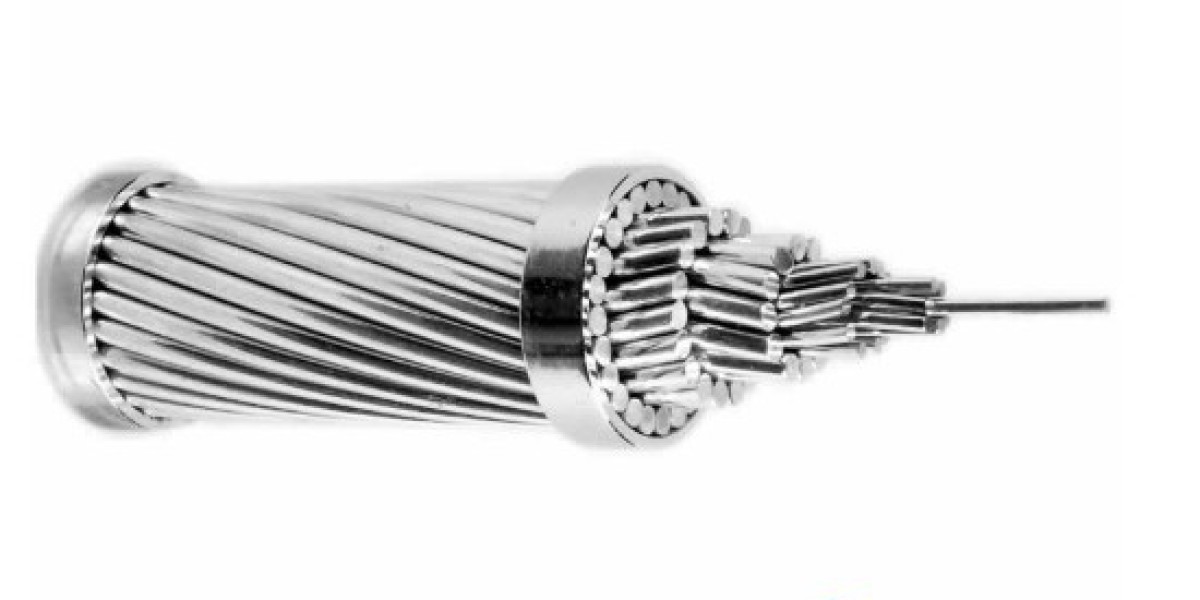
AAAC Conductor vs AAC plays a critical role in modern power distribution planning, especially when utilities evaluate lifecycle cost and system efficiency. Both conductors are widely used in overhead transmission and distribution networks, but their performance profiles differ significantly in long-term ROI considerations.
From a procurement and engineering perspective, the decision is not only about initial cost but also about losses, maintenance cycles, and environmental adaptability. This article provides a structured comparison to help utility engineers and procurement teams select the most cost-effective solution for real-world grid applications.
Advantages
AAAC Conductor vs AAC shows distinct advantages depending on system requirements and environmental conditions. AAC (All Aluminum Conductor) is widely valued for its excellent conductivity and low initial cost, making it suitable for urban distribution lines with short spans.
AAAC Conductor (All Aluminum Alloy Conductor), on the other hand, provides higher mechanical strength and better corrosion resistance. This makes it particularly suitable for coastal, industrial, and high-humidity environments where durability directly impacts ROI.
Key advantages comparison:
- AAC: Lower upfront cost, high conductivity, easy installation
- AAAC Conductor: Higher strength-to-weight ratio, better sag control, corrosion resistance
- Utility impact: AAC reduces CAPEX, AAAC Conductor reduces OPEX over time
For utilities focused on long-term investment efficiency, AAAC Conductor often provides better lifecycle value despite higher initial procurement cost.
Technical Specifications
AAAC Conductor vs AAC differs significantly in technical structure, conductivity, and mechanical performance, which directly affects system design.
AAC is composed of high-purity aluminum strands, typically meeting ASTM B231 standards, offering conductivity close to 61% IACS. It is lightweight but has limited tensile strength, making it more suitable for short-span, low-stress installations.
AAAC Conductor uses aluminum-magnesium-silicon alloy, improving tensile strength and corrosion resistance. It also complies with international standards such as ASTM B399, offering better mechanical stability under high wind and ice loads.
Typical specification comparison:
| Parameter | AAC | AAAC Conductor |
|---|---|---|
| Material | Pure aluminum | Aluminum alloy |
| Conductivity | Higher | Slightly lower |
| Tensile strength | Low | High |
| Corrosion resistance | Moderate | Excellent |
| Application span | Short | Medium to long |
For engineering design, AAAC Conductor provides better safety margins in complex terrain, while AAC remains cost-efficient for standard urban grids.
Durability and Maintenance
AAAC Conductor vs AAC has a major difference in durability performance, which strongly influences long-term maintenance costs.
AAC is more susceptible to mechanical fatigue and environmental corrosion, especially in coastal or polluted industrial areas. Over time, this can increase line sag and require more frequent inspection cycles.
AAAC Conductor offers improved resistance to corrosion and thermal expansion, resulting in longer service life and reduced maintenance frequency. This directly reduces operational expenditure for utilities.
Maintenance insights:
- AAC: Requires regular inspection in harsh environments
- AAAC Conductor: Lower inspection frequency, stable mechanical performance
- ROI impact: AAAC Conductor reduces long-term outage and repair costs
For utility operators aiming to minimize lifecycle disruptions, AAAC Conductor provides a more stable long-term solution.
Applications
AAAC Conductor vs AAC is selected differently across distribution systems depending on geography, load demand, and environmental exposure.
AAC is commonly used in urban distribution networks where span lengths are short and environmental stress is limited. It is also widely adopted in low-cost electrification projects where budget constraints dominate decision-making.
AAAC Conductor is preferred in coastal regions, industrial corridors, and rural long-span transmission lines where mechanical stress and corrosion risk are higher.
Typical use cases:
- AAC: Urban low-voltage distribution, short-span feeders, residential networks
- AAAC Conductor: Coastal grids, rural electrification, high-humidity industrial zones
- Utility strategy: AAC for CAPEX efficiency, AAAC Conductor for lifecycle optimization
In real engineering projects, many utilities adopt a hybrid approach, using AAC in stable urban zones and AAAC Conductor in exposed environments.
FAQs
1. What is the main difference between AAAC Conductor and AAC?
The key difference is material composition: AAC uses pure aluminum, while AAAC Conductor uses aluminum alloy for higher strength and durability.
2. Which has better conductivity?
AAC generally offers higher electrical conductivity, making it suitable for low-loss urban distribution lines.
3. Why do utilities choose AAAC Conductor in coastal areas?
Because AAAC Conductor provides superior corrosion resistance, reducing long-term maintenance costs in humid and salty environments.
4. Is AAC still widely used today?
Yes, AAC remains widely used in cost-sensitive projects and short-span distribution networks.
5. Which offers better long-term ROI?
AAAC Conductor typically offers better ROI due to lower maintenance and longer service life, despite higher initial cost.
6. Can AAC and AAAC Conductor be used in the same grid?
Yes, utilities often mix both depending on environmental and mechanical requirements.
7. Which is better for high-load transmission lines?
AAAC Conductor is generally preferred due to its higher tensile strength and stability under mechanical stress.
AAAC Conductor vs AAC ultimately comes down to balancing initial investment with long-term operational efficiency. While AAC offers attractive upfront cost advantages and high conductivity, its mechanical limitations can increase maintenance needs over time.
AAAC Conductor, by contrast, delivers superior durability, corrosion resistance, and structural stability, making it a more cost-effective solution for utilities focused on lifecycle ROI.
For engineers and procurement teams, the optimal choice depends on environmental conditions, span requirements, and budget strategy. In most modern grid expansions, AAAC Conductor is increasingly favored for long-term infrastructure reliability and reduced total cost of ownership.