
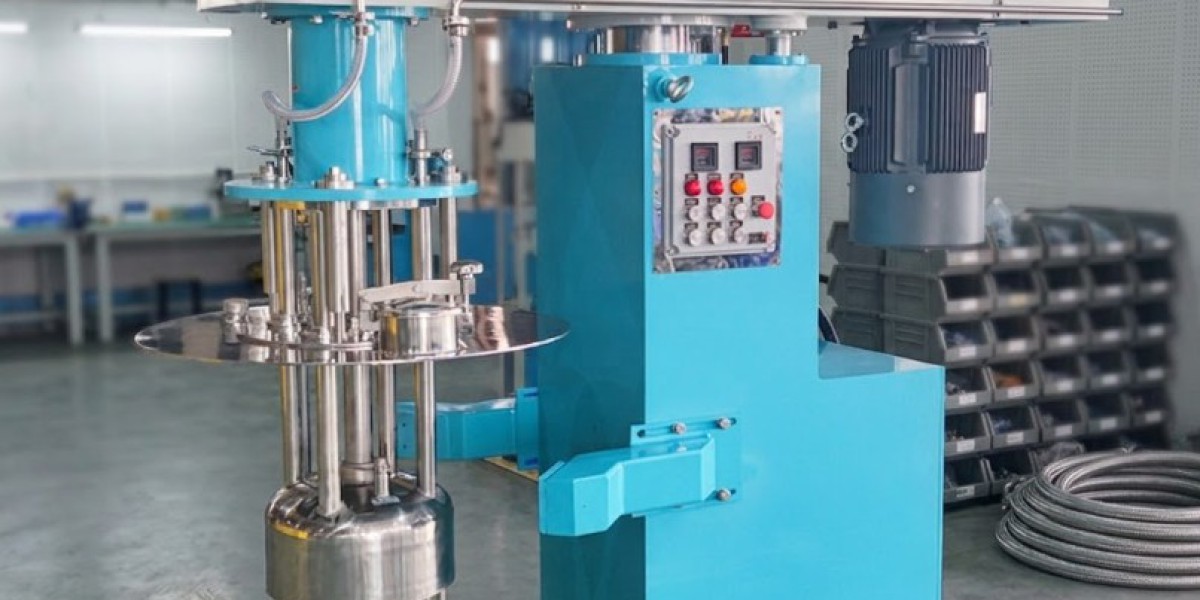
In modern manufacturing sectors such as coatings, printing inks, pigments, and specialty chemicals, achieving high dispersion quality and ultra-fine particle size is critical for product performance. Traditional grinding systems often require multiple pieces of equipment—premixing tanks, pumps, pipelines, and grinding mills—to complete the full process.
However, this multi-step approach can increase energy consumption, operational complexity, and cleaning requirements. As industries move toward more efficient and compact production systems, the Basket mill has emerged as an innovative solution that integrates multiple processing functions within a single machine.
A Basket mill is a multi-functional submersible wet grinding mill designed for batch processing, capable of performing premixing, dispersion, and grinding within one integrated unit. Manufacturers such as Rucca have optimized this technology to deliver higher grinding efficiency, lower operational costs, and simplified maintenance compared with traditional media milling systems.
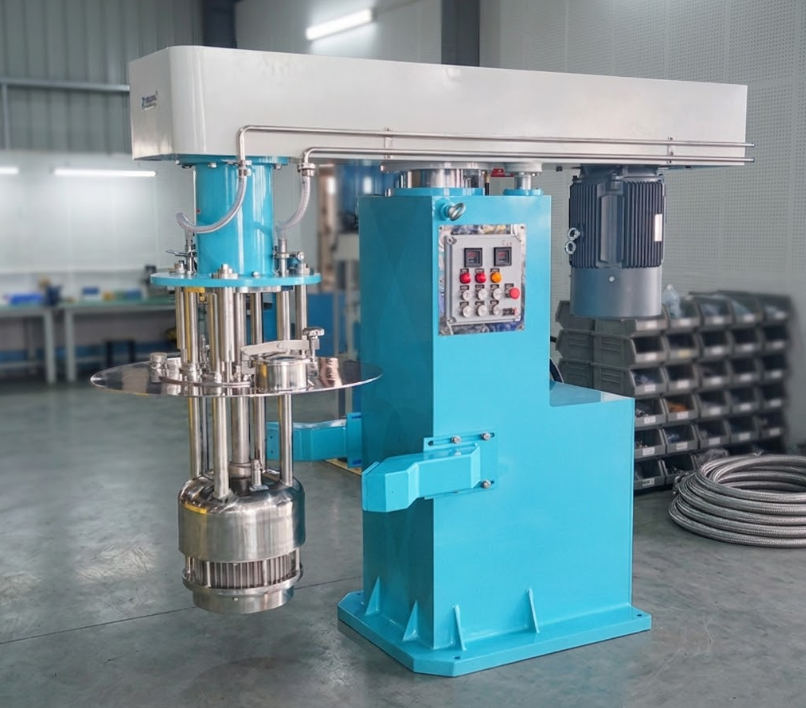
Understanding the Basket Mill: Structure and Working Principle
A Basket mill operates using a specially designed milling basket that contains grinding media and a high-speed dispersing system. The basket is immersed directly into the processing tank containing the material to be milled.
When the machine operates, the dispersing shaft rotates at high speed, generating strong hydraulic circulation. This movement continuously pulls the material into the milling chamber where it passes through a high-density dispersion zone filled with grinding media.
Within this zone, the material experiences intense mechanical forces such as:
Impact force
Shear force
Friction force
High-frequency collision with grinding media
This combination of forces effectively reduces particle size while simultaneously dispersing agglomerates.
One of the most distinctive advantages of the Basket mill is that the material repeatedly passes through the dispersion zone at a high frequency, which significantly increases grinding efficiency compared with traditional milling systems.
Key Engineering Features of Modern Basket Mills
Advanced Basket mill designs incorporate several technical innovations that improve performance and operational efficiency.
Integrated Premixing, Dispersion, and Grinding
Traditional milling lines require multiple machines to perform premixing, dispersion, and grinding. Basket mills integrate these processes into a single unit.
This integrated design offers several benefits:
Reduced equipment footprint
Simplified production workflow
Lower capital investment
Shorter processing time
Manufacturers like Rucca optimize their Basket mill systems to allow all three stages of processing to occur seamlessly within the same tank.
High-Density Dispersion Zone
The optimized internal structure of the milling chamber ensures that materials pass through the grinding media zone frequently and uniformly.
This design leads to:
Higher grinding efficiency
Improved particle size distribution
Faster processing cycles
By maximizing the interaction between materials and grinding media, the Basket mill achieves excellent dispersion quality even for high-viscosity formulations.
Energy Efficiency and Reduced Solvent Waste
Another major advantage of Basket mills is their energy-efficient design. Because the grinding chamber is directly immersed in the material container, there is no need for auxiliary equipment such as:
Transfer pumps
Circulation pipelines
Additional storage tanks
This eliminates energy losses associated with pumping and material transfer.
Furthermore, the simplified system reduces solvent consumption during cleaning, which lowers both operational costs and environmental impact.
Easy Cleaning and Maintenance
In many industrial production environments, equipment cleaning can consume significant time and resources. Basket mills address this issue with a design that allows the grinding basket to be easily lifted out of the tank.
This feature offers several operational advantages:
Faster cleaning between production batches
Reduced cross-contamination risk
Lower solvent usage
Simplified maintenance procedures
These benefits are particularly important for manufacturers producing multiple product formulations.
Industrial Applications of Basket Mills
Because of their high efficiency and versatility, Basket mills are widely used in industries that require fine particle dispersion and high product uniformity.
Pigment Manufacturing
Pigments require extremely fine particle size to ensure proper color strength and stability. Basket mills can efficiently break down pigment agglomerates and achieve uniform dispersion.
Printing Ink Production
Ink formulations demand precise control of particle distribution to ensure printing quality and consistency. Basket mills provide the high-shear forces needed for optimal dispersion.
Coating and Paint Industry
Modern coatings often contain complex formulations with resins, fillers, and pigments. Basket mills are highly effective in producing stable dispersions with excellent gloss and color performance.
Specialty Chemical Processing
Industries such as adhesives, functional materials, and electronic chemicals also benefit from Basket mill technology due to its ability to handle high-viscosity materials with precision.
Manufacturers like Rucca provide Basket mill solutions specifically engineered to meet the demanding processing requirements of these industries.
Advantages Over Traditional Media Milling Systems
Compared with conventional grinding systems, Basket mills offer several significant advantages:
Compact System Design
Eliminates the need for complex pipelines and multiple processing units.
Higher Processing Efficiency
Frequent material circulation through the dispersion zone increases grinding performance.
Lower Energy Consumption
Reduced mechanical losses and simplified system architecture improve energy efficiency.
Reduced Solvent Waste
Simplified cleaning reduces solvent usage and environmental impact.
Operational Flexibility
Suitable for a wide range of materials and batch sizes.
These advantages make Basket mills an increasingly popular choice for modern industrial production lines.
Conclusion
The Basket mill represents a significant advancement in wet grinding technology by integrating premixing, dispersion, and grinding into a single highly efficient system. With its energy-saving design, high grinding efficiency, and simplified maintenance requirements, this equipment has become an essential tool for industries requiring high-quality particle dispersion.
From pigments and printing inks to coatings and specialty chemicals, Basket mills provide reliable and cost-effective solutions for achieving superior product quality. Through continuous innovation and engineering expertise, Rucca delivers advanced Basket mill systems that help manufacturers improve productivity while reducing operational complexity.


